Stems and leaves are the same size as the product but weigh far less. A screen cannot tell them apart by size, so an air stream does that job: it lifts the light pieces and leaves the product on the deck.
Why weight, not size
A screen sorts by the opening it is given. A raisin stem can pass over the same panel as a raisin because it is long and thin but about as wide as the fruit. A dry leaf is flat and will lie on top of the product bed. Both are light compared with the fruit.
Air separates by the relation of weight to surface area. A flat leaf has a lot of surface for very little weight, so a moderate air stream lifts it. A raisin or a bean has much less surface for its weight and stays put.
How the machine is built
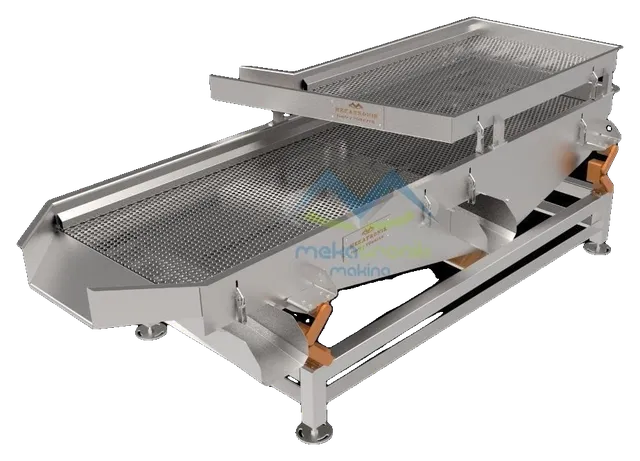
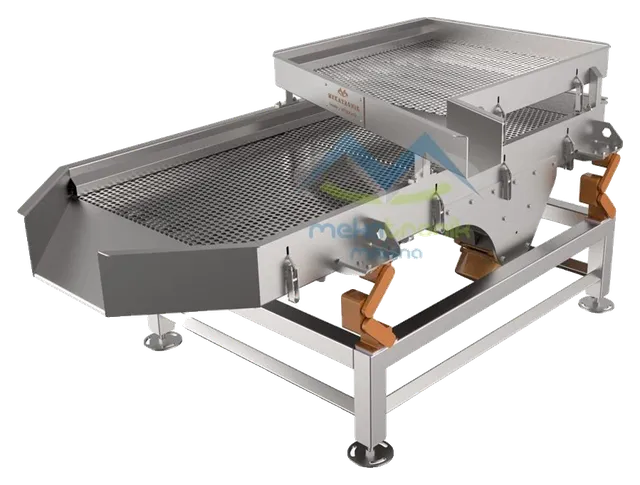
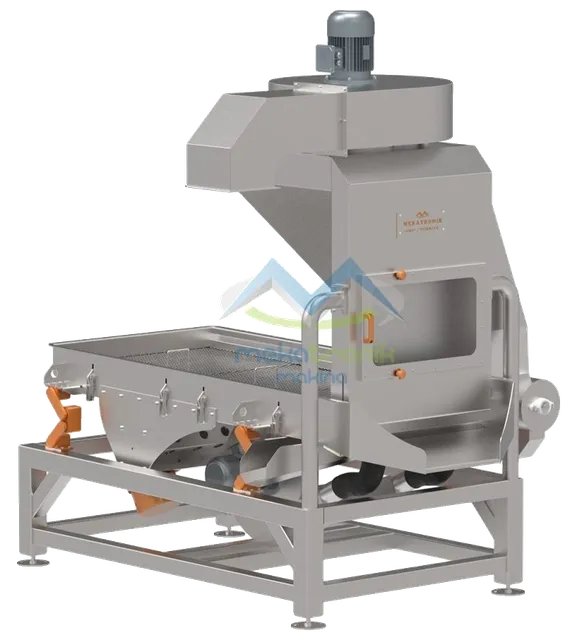
The vibrating screen with aspiration does both jobs on one deck. Product falls onto the screen, where stones and soil are separated by screening. Leaves, stems and light debris are lifted by the air stream and carried out through the aspiration outlet.
The machine is listed for raisins, dates, beans, chickpeas, sunflower seeds and pumpkin seeds. The drive uses two vibration motors of 0.75 kW each and a 5.5 kW aspiration fan, about 7 kW in total, on a 380 V / 50 Hz supply. The screen is a replaceable stainless panel with quick release, and access covers allow quick cleaning.
What the air stream needs to do
The air has to be strong enough to lift debris and weak enough to leave the product alone. Several things move that balance:
- Product weight. Heavier pulses tolerate a stronger stream than light dried fruit pieces.
- Layer depth. Vibration spreads the product over the deck. A thin, even layer exposes the debris to the air. A thick layer hides it.
- Debris type. Dry leaves lift easily. Damp or sticky stems stay attached to the fruit and need more time or a different treatment before the screen.
- Outlet condition. A blocked or dusty outlet cuts the airflow without any change at the fan.
Bottom-blown version
On the standard machine the air is drawn across the deck from above. The bottom-blown version blows air from below, which pushes debris toward the aspiration hood faster. It suits product where light debris tends to sink into the bed. The option list also includes a lump breaker above the deck for caked product, which matters because debris trapped inside a lump never meets the air.
When light debris stays in the product
If stems or leaves appear in the discharge, check in this order:
- Feed. Is the product arriving in surges? An uneven feed buries debris. A feeder ahead of the screen, such as a vibratory hopper feeder, keeps the rate steady.
- Air path. Look at the outlet, the duct and the hood for built-up dust or caught pieces.
- Panel. A worn or wrong opening size changes how the product moves on the deck.
- Product condition. Damp material behaves differently from dry material, so a change of season or storage may be the cause.
Only after these checks does it make sense to look at the fan itself.
What aspiration does not do
Aspiration does not remove material that has the same weight as the product. Stones and soil are heavier and fall through or stay on the screen, which is why the deck still matters. Pieces of the same fruit that are damaged but equal in weight are also left alone. For a full picture of where each separation takes place, see the article on foreign material control.
Cleaning and changeover
The access covers matter for the air duct as well as the deck. Dust settles in the duct and on the hood and can change the flow over time. Clean these parts on a schedule. When the product changes from a light fruit to a heavy pulse, review the air setting and the panel together.