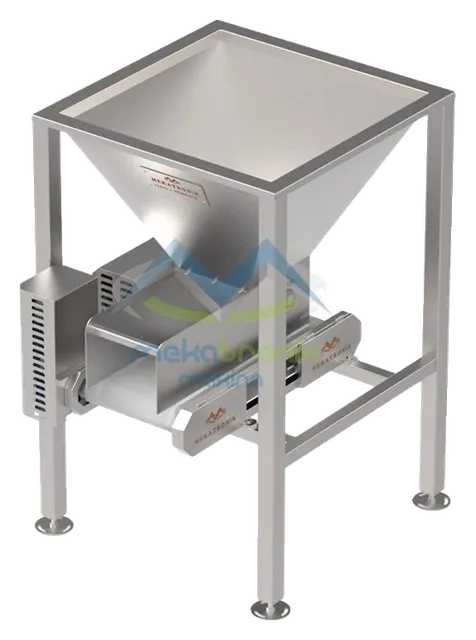
A sizing screen grades single pieces. A clump of three raisins stuck together behaves like one large piece, so it rides to the wrong outlet. The place to fix this is before the screen, at the feed point, where the clumps can be opened into single pieces.
What a clump does to the sizing result
On a two-deck sizing screen, each piece is sorted by whether it fits through the openings. Pieces that stick together are as wide as the whole clump. A clump of small fruit is graded as one large piece, and the fruit inside ends up in the wrong size fraction.
The effect is quiet. The screen runs normally, the openings are clean, and the fractions still come out of the outlets. Only the contents are wrong: a larger fraction with small fruit inside it, and a smaller fraction that is missing some of its pieces. This is found later, at inspection or packing, when it is expensive to correct.
Why dried fruit clumps
- Sugar on the surface. Raisins, apricots, figs and dates carry sugar that acts as glue, especially when the fruit is warm.
- Moisture. Product that comes from a washer or a humid store holds surface moisture that makes pieces stick.
- Pressure. Fruit stored in bulk or tipped from bins sits under its own weight and bonds.
- Cold-to-warm changes. Fruit moved from a cold store to a warm room collects condensation and tackiness.
The feeding point
Product that is emptied by hand arrives in lumps. The vibratory hopper feeder is made for this position. According to the product page, it takes in product emptied by hand and feeds the next machine at an even rate. Agitators in the trough help break the product up into single pieces.
The how-it-works section describes three steps: product emptied by hand goes into the trough, agitators inside help separate the pieces, and the product is passed to the next stage at an even rate.
The feeder is made of AISI 304 stainless steel with AISI 316 optional depending on the process. Its drive is a geared motor, control is PLC or stand-alone, and the construction is easy to clean. The supply is 380 V / 50 Hz. Capacity is set per project.
Why the agitators and the even rate matter together
Opening the clumps and then feeding evenly are two separate jobs, but they depend on each other.
An even feed gives the screen a thin, steady stream. Single pieces in a thin stream can reach the screen openings without help from neighbours, so size grading works as intended. A feeder that breaks clumps but releases them in bursts would still overload the deck for a few seconds at a time.
The agitators work in the trough, where the product is at rest. They separate pieces before they leave the trough, not after they land on the screen, where there is less chance to open them.
Checks at the feed point
- Look at the stream. Single pieces should leave the feeder. If lumps leave the trough, the product is too sticky or the agitators are not reaching the whole trough.
- Check for a bridge. Product that stays in the corners of the trough without moving can form a bridge over the outlet and then drop all at once.
- Check feed continuity. The flow should look steady on the deck below. Surges point to a feed rate problem.
- Watch the first meter of the screen deck. If clumps still arrive, they will be visible there before they spread out.
When clumping persists
If the feeder works properly and clumps still reach the screen, the cause is usually upstream. Fruit that stays wet after washing will keep sticking regardless of the feeder. In that case, dewatering is the right place to look, and the dewatering vibrating screen is used for removing wash water from the product before the next stage.
The sizing and selection guide explains how the feed rate, the deck and the openings are matched to each other; see the sizing and selection guide.