The opening shape decides which dimension of a piece is measured. A round hole measures the smallest cross-section of the piece. A square hole measures it too, but passes pieces at a diagonal differently. A slot measures width only and ignores length. Pick the shape by the dimension that matters in the next step of the line, not by habit.
What each shape measures
Round openings pass a piece when its smallest cross-section fits the circle. A long, thin piece can stand on end and drop through, so length has little effect. Round holes suit products that are close to round or oval and are graded by diameter, such as raisins.
Square openings behave like round ones for most compact pieces, but a piece that sits at an angle to the mesh can pass or be held depending on how it lands. The open area is usually higher than with round holes of similar size. Square openings suit hard, compact pieces and are less forgiving with soft, flat fruit.
Slotted openings are long and narrow. Width decides the cut, length is free. A slot passes thin, flat or elongated pieces that a round hole of the same width would hold back, and it holds back thick, round pieces of that width. Slots work best when pieces are oriented along the flow, which the forward motion of the deck encourages.
Choosing by product
The right shape follows how the product is graded and how it tends to sit on the deck.
| Product | Shape in practice | Reason |
|---|---|---|
| Raisins | Round | Graded by diameter; roughly round pieces |
| Dried apricots | Slotted or round | Halves lie flat and elongated; slots grade by width, round holes by thickness |
| Dried figs | Round, larger openings | Soft, irregular, and they deform on the deck |
| Dates | Slotted | Elongated pieces; width is the useful grade |
These are starting points. The deck opening for each product group is set at commissioning with the actual product, as described in the sizing and selection guide, and adjusted after the first runs.
Soft fruit changes the answer
Dried fruit is not a rigid test sphere. A soft apricot half can fold and pass through an opening that its flat outline would never fit. A sticky fig can bridge an opening and close it. The more a piece deforms under vibration, the less the nominal opening size describes what actually happens.
For soft products, the cleanest rule is to test the shape with real product from the actual line, at the moisture it will have on the day. A sample from the lab shelf is drier and stiffer than product coming off a washer or a cooler.
Open area, blinding and wear
Three practical points sit behind the shape choice.
- Open area. More open area passes more product per unit of deck. A thin web between holes raises open area but weakens the panel and is more easily damaged.
- Blinding. A piece that wedges in an opening blocks it. Round holes tend to hold a piece that is slightly oversize all the way round. Slots tend to hold long pieces that enter at an angle and jam. Where sticky fruit is involved, check blinding first.
- Cleaning. Every opening is an edge that product can pack against. Panels that come out quickly for washing matter more than the exact shape, so state the washdown routine when the screen is specified.
Two decks, two shapes
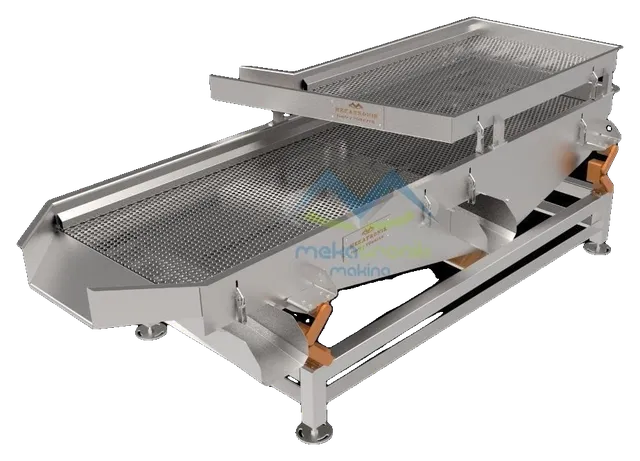
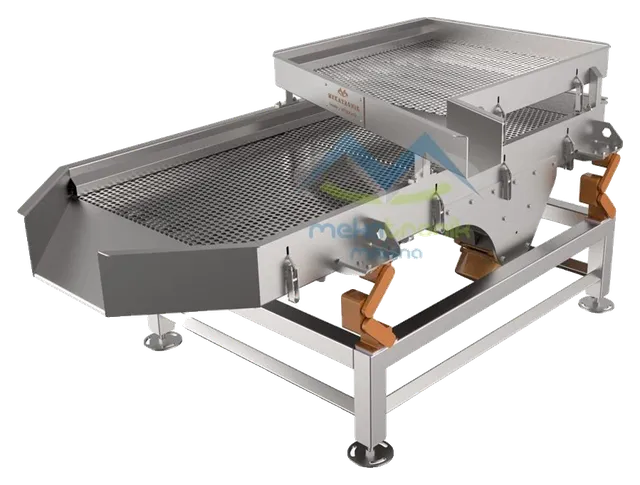
A two-deck screen does not need the same shape on both decks. The top deck has a different job from the lower one. On the sizing vibrating screen, product is fed onto the top deck, coarse debris stays there, and smaller pieces drop to the lower deck. Each size fraction then leaves through its own wide outlet. The top deck is a coarse cut, so its openings are chosen to hold debris and pass every acceptable piece. The lower deck grades the fraction, so its shape follows the grading dimension of the product.
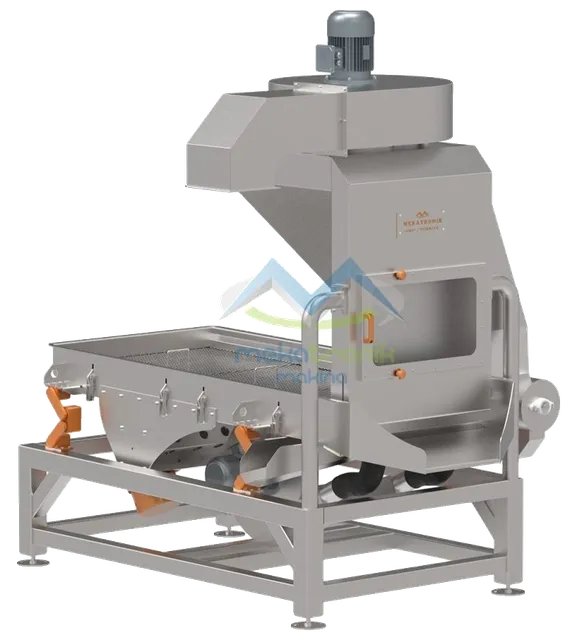
On the impurity removal screen, the same two-deck layout takes coarse debris out of the incoming product. Here the opening only has to pass sound fruit and hold stems, clumps and foreign pieces. A slot or a round hole can do that depending on what the debris looks like. Long stems pass a round hole of the right width if they stand on end, so a short slot or a smaller round opening may hold them better.
Checking a panel in service
Shape errors show up in the outlets, not on the drawing.
- Take a sample from each outlet and sort it by hand into pieces that belong and pieces that do not.
- If undersize pieces ride over, look for blinded openings before changing the shape.
- If oversize pieces pass through, look at the panel for wear, enlarged openings or a damaged web, and compare the shape with the product's flat or elongated pieces.
- If good product is lost in the debris outlet, the top deck opening is too small or the feed is too thick for pieces to find the openings. Layer thickness and stroke matter as much as shape; see screening efficiency.
Changing shape between seasons
A crop varies from year to year. Fruit that comes in smaller or drier one season may need a different opening than the year before. A line that runs several products benefits from panels that can be swapped without tools. The panel is stainless steel made for the product group, so the change is a question of which panel is fitted, not a different machine.
Ask for the opening shape to be listed on the machine drawing and keep a record of which panel was fitted for which product. When a grade complaint arrives, that record shortens the search.