A food grade vibrating screen is one where every surface the product touches is stainless steel, and where the whole machine can be opened and cleaned without tools or guesswork. The grade of steel is only half of that answer. The other half is the shape of the machine.
Which surfaces count
Not every part of a screen touches the product. The surfaces that do are the screen decks, the panels, the feed chute, the outlet chutes and the inside of the body. These are the parts that need to be food grade.
Parts that do not touch the product, such as the vibration motors, the springs and the frame outside the housing, are held to a different standard. They still matter for hygiene, because dust and splashes land on them, but they are not in the product path.
When comparing machines, ask for the material of the product contact surfaces, not only the material of the body. The two can differ.
AISI 304 as the usual choice
AISI 304 is the standard stainless steel for dry and lightly damp food. It resists corrosion from water, from the sugars and fruit acids in dried fruit, and from the cleaning routines used in most plants.
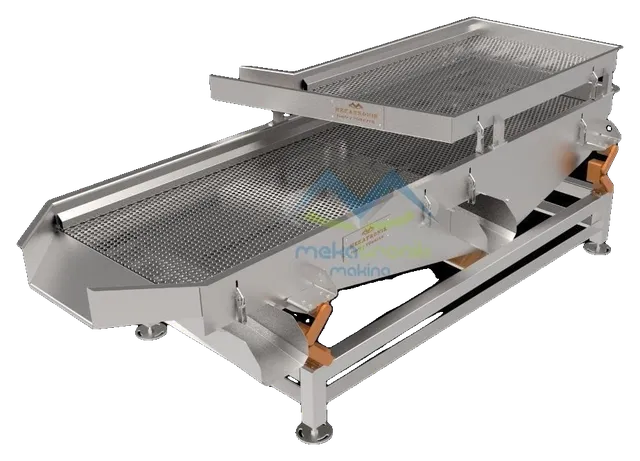
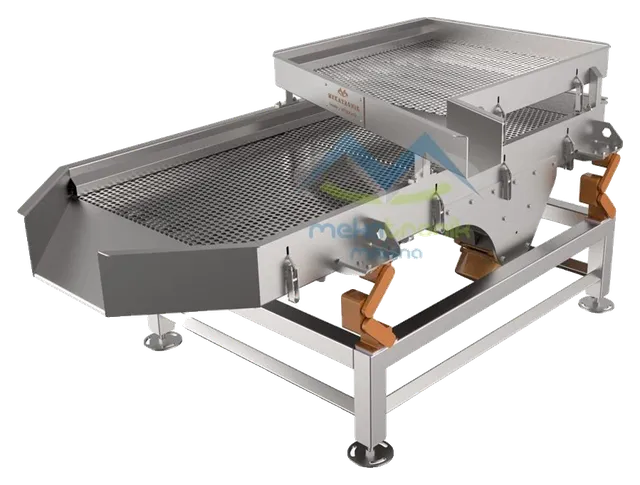
The sizing vibrating screen is built this way. According to its product page, the body and the product contact surfaces are AISI 304 stainless steel, and the screens are stainless and made for the product group. It handles dried apricots, figs, raisins and dates.
For a dry line that grades or cleans dried fruit, AISI 304 is normally enough. It is the grade a buyer should expect as the baseline, not as an upgrade.
When AISI 316 is worth asking for
AISI 316 contains molybdenum, which gives it better resistance to chlorides and to some acids. The practical question is whether the process puts those on the machine.
Cases that point toward AISI 316:
- Salt. Brined or salted product, or salt in the wash water.
- Strong cleaning chemicals. Chlorine-based sanitisers used often and left on the surface.
- Acidic product or coatings. Fruit with an acid or preserving treatment that stays on the surface.
- Wet duty in a humid hall. Constant moisture speeds up pitting on lesser grades.
The product pages on this site list AISI 316 as optional, depending on the process, for the product contact surfaces. It is a decision for the process, not a default. A dry line without salt or aggressive sanitiser gains little from it, and the machine should be specified for what actually reaches the steel.
If you are unsure, describe the product, the wash water and the cleaning chemical to the supplier and let the contact surface be chosen from that, instead of choosing the grade first.
What cleanable design means
Steel grade does not clean a machine. Shape does. Look for these features:
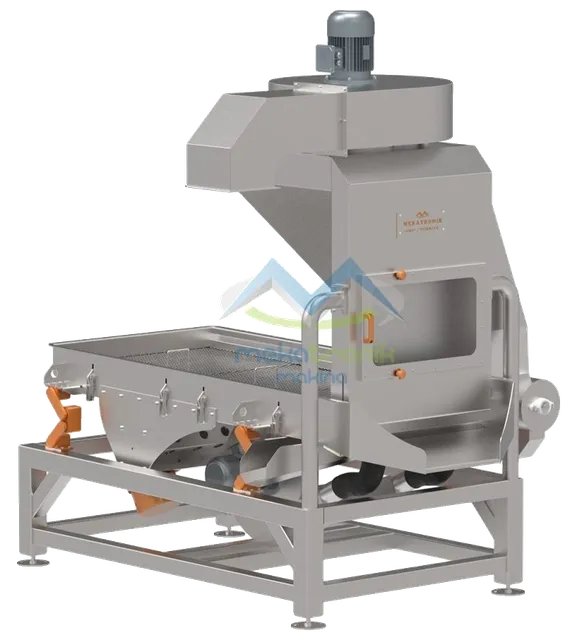
- Access covers. The vibrating screen with aspiration has access covers for quick cleaning, so the inside can be reached without taking the machine apart.
- Replaceable panels with quick release. The same machine uses replaceable stainless screen panels with a quick release. Panels that come out fast are panels that actually get taken out and washed.
- Wide outlet chutes. Chutes that are wide and smooth do not hold product in corners where it dries and spoils.
- Few horizontal ledges. Flat shelves collect dust and fruit. Sloped or rounded surfaces shed them.
- Clean welds. Welds on product contact surfaces should be continuous and smooth, with no pits where residue can sit.
The test is simple. Open the machine and look for places where a hand, a brush or a hose cannot reach. Those places hold residue.
Changeover and allergen control
On a line that runs more than one product, the screen is cleaned at every changeover. A machine that takes five minutes to open is cleaned properly. One that takes an hour is cleaned in a hurry.
Quick-release panels and access covers matter most here. Residue from one product that remains on a deck can end up in the next batch. For allergen products this is a control point, so the cleaning routine should be written down and the machine should allow it to be followed.
Dry cleaning and wet cleaning
Dry cleaning, with brushes and vacuum, suits most dried fruit lines. Water adds moisture that sticks fruit to the deck and encourages mould in corners if the machine is not dried afterwards.
Where wet cleaning is used, the machine should drain, and the motors and electrical parts should be protected from spray. Dry the deck before the product returns. Water left on a screen panel will blind the openings with the first fruit that arrives.
Checks during daily operation
- Look at the product side of the deck at the start of each shift for residue and for torn or stretched panels.
- Check that the outlet chutes are free of old product.
- Check the joints between the housing and the covers for gaps where dust enters.
- Check the stainless for scratches and rust spots. Rust on stainless usually comes from carbon steel tools or from iron dust settled on it, not from the steel itself.
Further inspection items for springs, motors and panels are collected in the maintenance guide.
Choosing in practice
Start from the product and the plant, not from the steel grade. List what touches the machine: the product, any wash water, the cleaning chemical, and the air in the hall. From that list, decide between AISI 304 and AISI 316 for the contact surfaces. Then check the cleaning features against how often the line changes product. A machine with the right steel and poor access will be cleaned badly, and a machine with good access in the wrong steel will corrode. Both parts need to be right.